
Buying Guide: Vintage for the Garden
- Amanda Lennon

- May 5
- 5 min read
Updated: May 6
How to choose pieces for a more personalised outdoor space
There’s something rather special about a garden that hasn’t been bought all at once.
The best ones feel gathered. Evolved. As though each piece has found its place over time rather than being carefully “matched”.
At Chaos Cottage, that’s always how we approach outdoor spaces, layering in antique and vintage finds that bring both usefulness and character. But knowing what to buy (and what’s worth it) can feel less straightforward.
So this is a gentle guide to some of our favourite garden pieces; what to look for, what to avoid, and how to use them in a way that feels natural rather than styled.
PS. We DO always want it to be finished and perfect immediately, just like everyone else, but we've made enough mistakes to know that there's very little about gardening and gardens that results in instant gratification!
Old Washing Mangles
Unexpected, practical (well, we might be pushing it a little here) and full of presence
Not the most obvious garden buy but a piece of fabulous staging that can add interest and that cottagecore feel.
What to look for:
Solid structure (they’re heavy, and should feel it)
Original rollers if possible, though replacements are fine
Surface wear rather than structural damage
A stable base if you’re planning to use the shelf for plant pots
What to avoid:
Severe rust where it compromises stability
Warped frames that make it unsafe to use
How to use them:
An old washing mangle makes a wonderful display surface and we have seen them turned into potting stations. Ours stands surrounded by large planters and offers perfect staging for terracotta pots full of geraniums or pansies.
This is one of those pieces that turns a garden into a conversation and when the washing machine breaks.... well, you could wring out your clothes.... sort of!


Galvanised Planters & Tubs
Stylish planting with a reclaimed, aged feel
Originally designed for agricultural or household use, these are as practical now as they were decades ago, unless of course they have already had holes drilled into the bases. In that case, they're fab for plants, not so fab for washing muddy spaniels.
What to look for:
Aged galvanised finish or zinc (slightly dulled or greenish)
No sharp edges or splits
Good depth for planting
Signs of use as these add to the charm and story
What to avoid:
Lightweight reproductions. They might be cheaper but they won't last and the environmental cost of production including the mining is high - we're purists about repurposing and reusing.
Major rust-through holes, unless you’re using as decorative only.
How to use them:
Perfect for herbs, seasonal planting, or even small trees,they work particularly well near doorways or grouped along paths where their muted tones let greenery shine.
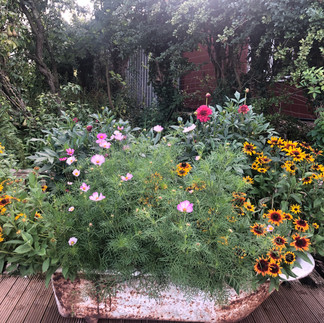
We even have an old cast iron bath in the garden filled with bulbs, foxgloves, cornflowers and such like. It makes for interest during every season.






Urns & Pots
The quiet backbone of any cottage garden
These are the pieces that anchor a space. We generally have a few large antique and vintage urns that are often made from composite stone, rather than solid stone, which ages well and is rather more forgiving of the passage of time and weather. There are different styles but the most popular is 'Campana' or bell-shaped with a classic flared rim, intricate relief carvings and scroll handles such as the ones shown in the pictures.
We also always have tonnes of pots! I get really annoyed every year when Mr 'stores' the ones I'm not using in our 'Secret Garden' aka the dump behind a large bramble hedge. They get broken in the cold weather and when spring comes I have to go on a buying trip to find some more.
What to look for:
For stone urns, troughs and pots: weight, weathering, and good drainage
For terracotta: variation in colour and patina
Chips and wear, these add authenticity, but make sure they're not all the way through.
What to avoid:
Bright, uniform terracotta (often newer)
Significant cracks as these won't survive frosts and freezing temperatures unless you're prepared to repair them professionally.
How to use them:
A beautiful urn can make a stunning centre-piece as standalone or planted with a rose or even 'dinner-plate' dahlia such as a cafe au lait. We currently have two delightful
roses in our pair of matching urns.
Cluster pots in groups rather than placing individually. Mix sizes and shapes for a relaxed, collected look. These pieces are at their best when they don’t feel too arranged.
If you can't find aged/old pots, though there should be plenty at any local auction and/or Facebook Marketplace, then you can buy new and age them yourself. Either, live with them for a couple of years - they'll soon look 'less new' or wipe some yogurt on the outside of them, pop them into a shaded, damp spot and they'll initially grow bacteria and algae, maybe attract a little moss, and they'll look nicely aged.


Garden Benches
Places to pause, not just to sit
A good bench is less about perfection and more about placement. We have them dotted around - some to be a useful stop on the way to the car with shopping or parcels for shipping, others are there to take adavantage of the sunshine and flowers, and others are simply there because they look pretty.
What to look for:
Solid construction, even if slightly uneven in appearance, unless you're happy to restore and repair
Weathered wood or aged metal
Comfort - if you’re going to use it, it needs to be comfortable!
What to avoid:
Overly restored pieces that have lost their character
Weak joints, cheaper woods or instability.
How to use it:
Tuck a bench somewhere slightly unexpected - under a tree, beside a border, or facing evening light. It should feel discovered rather than positioned.


Where to find interesting items & what to spend:
You can find fabulous vintage pieces in lots of places; obviously our Etsy store but also eBay, Facebook Marketplace, car-boot sales, antique and vintage fairs - please do try to support small independent businesses if possible.
Mangles: For a solid, working mangle (though bear in mind the rollers, if original, will be dirty) with nice patina you can spend anywhere between £125 - £500. For something rustic and pretty in the garden we would advise looking at the lower end of the range given the sparrows in our garden do like to sit on ours and have a poo!
Urns and pots: Urns are rather specialist and need to be shipped by professionals as they should be very heavy - if the one you are buying isn't, it's not authentic. Expect to pay anything from £1000 to several thousands depending on your taste, authenticity, stone vs composite and size. Check specialist stores and antique/vintage fairs where dealers may have stock that you can view on the day.
Pots are available all over the place. As mentioned check Facebook Marketplace but also your local garden centre - they may have old stock out back or age them with yogurt as mentioned earlier.
Garden benches: Widely available online - but you'll find lovely examples in antiques barns and reclamation yards. We particularly like (and buy) very tired benches that have cast iron sides. These are often Victorian and the timbers can be replaced quite easily if they're really rotten. They need to be heavy if they're authentic. Expect to pay upwards of £250 for a rusty Victorian bench needing work to £1000+ for a nice example. Check your local auction - they often come out of houses being redeveloped and deceased sales but make sure you're aware of the buyer's commission before getting too carried away!


Comments