
Why Buying from Small Businesses Isn’t the Same as Amazon
- Amanda Lennon

- May 7
- 3 min read
... and why it matters
Every so often a message arrives at Chaos Cottage that feels less like a conversation and more like a corporate negotiation.
Recently, one such message landed regarding a vintage snooker table that was already reduced by 25%. A carefully sourced item requiring specialist delivery. It came as a “best and final offer”, complete with a deadline that would "expire at 18:00hrs".
It wasn’t just the number (which was rude enough). It was the tone.
Abrupt. Transactional. Lacking any sense that there is a person on the other end.
And that, more than anything, is what feels increasingly out of place when buying from a small business.
When buying becomes winning
There’s a growing trend in online marketplaces where buying is treated as a competition. I'm not sure if all of the TV programmes and social media about bargain hunting are to blame for the lack of etiquette. Contestants are often encouraged to make very low and unreasonable offers to fit their budgets so that they can "win" and the small retailers participating feel that the media exposure they receive is enough to make the loss worthwhile. What it does though, is breed a style of behaviour that, quite frankly, I find insulting.
Start low.
Push hard.
Create urgency.
Win the deal.
But buying vintage furniture, or anything from an independent business, isn’t a zero-sum game. It isn’t about winners and losers. It’s about finding the right piece, at a fair price, for both sides.


We are not Amazon
Small businesses are not built like large-scale retailers.
At Chaos Cottage:
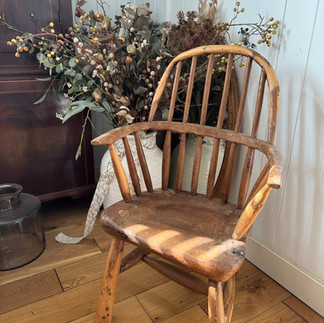
each item is unique
stock is carefully sourced, not mass-produced
margins are real and considered
delivery often requires specialist handling
There is no endless supply. No warehouse. No algorithm quietly absorbing losses.
There is just one piece - and when it’s gone, it’s gone.





Why manners matter when buying online
Offers are always welcome. But how they are made matters.
A polite enquiry opens a conversation. A rigid demand closes one.
When buying from small businesses, you are speaking directly to the person behind the work, not a system.
And tone has a way of shaping the outcome.






The Hidden Cost of Hard Negotiation
Aggressive negotiation doesn’t just affect the price, it affects the entire transaction.
From experience, when a buyer pushes beyond what they are comfortable paying, dissatisfaction often follows. Not because the item is wrong, but because the decision didn't feel right for them and they have failed to create a positive relationship with the item and the seller.
That’s why many small businesses will quietly step away from certain offers.
Not to be difficult, but to avoid a poor experience for everyone involved.
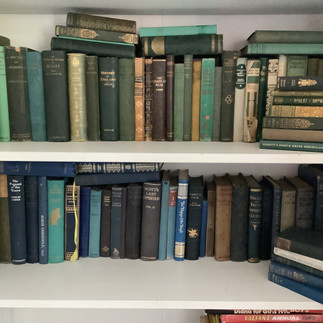
We have lots of repeat buyers including corporates for whom we source everything from books (Bletchley Park) to fine china (Hollywood) to 80s furniture (Coronation Street). We nurture these relationships because we don't adhere to the priniciple of "it's only business, it's not personal". It is personal for us. We do not conduct our business interactions in a different way to our personal ones.





Why supporting small businesses matters
There is a bigger picture here.
If independent businesses are treated as though they operate like global retailers, they simply won’t be able to continue in the same way.
And when they disappear, so does:
individuality
craftsmanship
sustainability through reuse
the joy of finding something truly unique
Supporting small businesses helps preserve choice and a more thoughtful way of buying.



A More Thoughtful Way to Buy Vintage
At Chaos Cottage, we believe in slower, more considered buying.
Choosing pieces because you love them. Because they suit your home. Because they will be lived with and enjoyed.
Not because they were forced into a number.


Comments